World War I - the Battle of the Somme
(I wrote this about visits to some World War I sites. I won’t mind if you skip to the pictures. This is tough stuff to write about and tough stuff to read.)
I call World War I the “forgotten war” in the United States, because the U.S. was in it for only about 18 months and didn’t lose nearly as many men as in WW II. Our presence was decisive, not because our soldiers were so much better or braver, but because the two sides - Germany versus France and Britain - had spent four years beating each other to a pulp to the point where they simply could not wage war any more. The United States entered the war in April, 1917, and by Spring 1918 was sending 10,000 troops per day to France. In the final offensive of the war, from April to November of 1918, the fresh American soldiers overpowered the decimated and worn out German forces. It took only six months.
Here’s the reason American troops were so important: in the previous four years, France lost 1,357,800 men, Britain 908,000 and Germany 1,774,000. In 1918 the western front combatant nations simply had no troops able to fight a battle, much less a war.
The Battle of the Somme launched on July 1, 1916. British and French forces attacked the German lines. Generals believed they would accomplish a breakthrough the first day - the second at the latest; they believed heavy artillery shelling would have destroyed the German defenses. Hoo-boy, were they wrong. On the first day the British forces lost 19,640 men - the largest one-day death toll in the history of the British army. They accomplished essentially nothing. Four months later winter stopped the offensive; the lines of the front had moved just a few miles in one area, and not at all in the rest of the battle area.
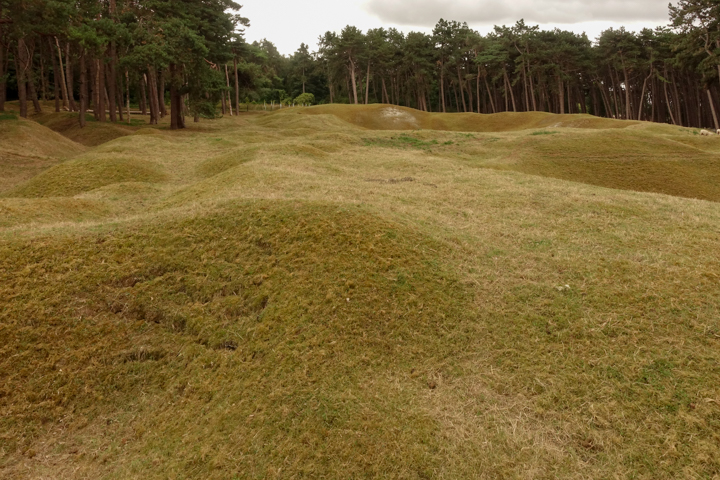
I thought we would be able to see the battle sites of the Somme, but not so. We learned that there is nothing to see: the sites are now farms and roads and parks and towns. The villages—totally destroyed during the war—have been rebuilt. Where the battle completely destroyed forests, the 110 years since the battle have allowed them to return. There really are no visible reminders of the battles that raged here.
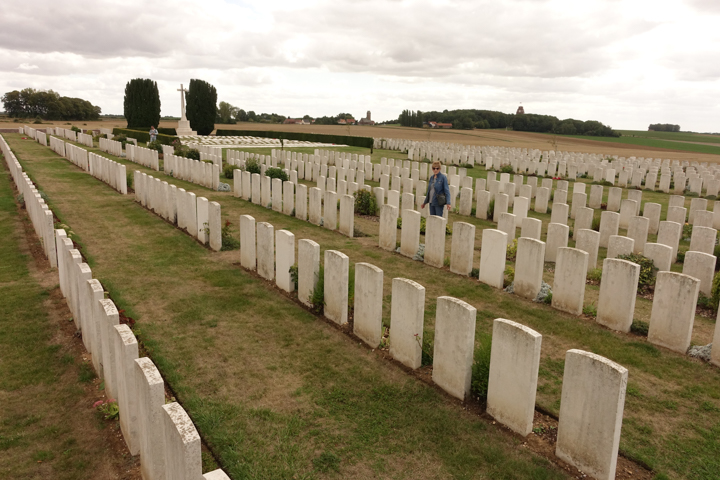
What’s still visible? Monuments to the soldiers and graveyards. Britain chose to bury its soldiers near where they fell. As we traveled through the area, we saw small cemeteries—each with a couple dozen to a couple hundred graves. I read that there are over a twenty-nine hundred British cemeteries in France holding British soldiers who were killed in World War I.
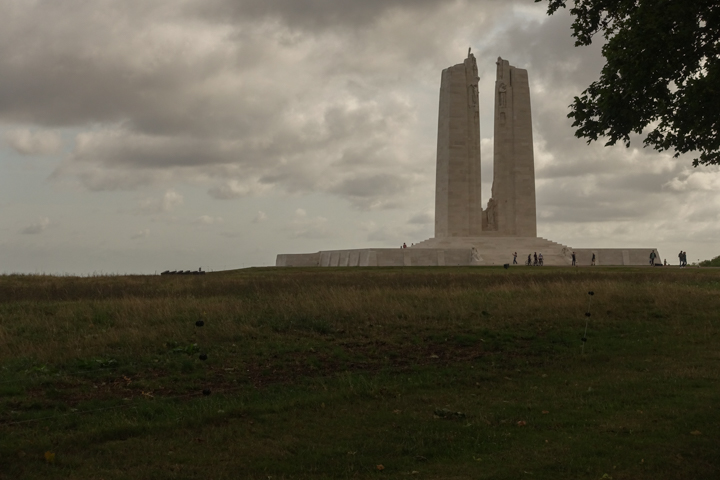
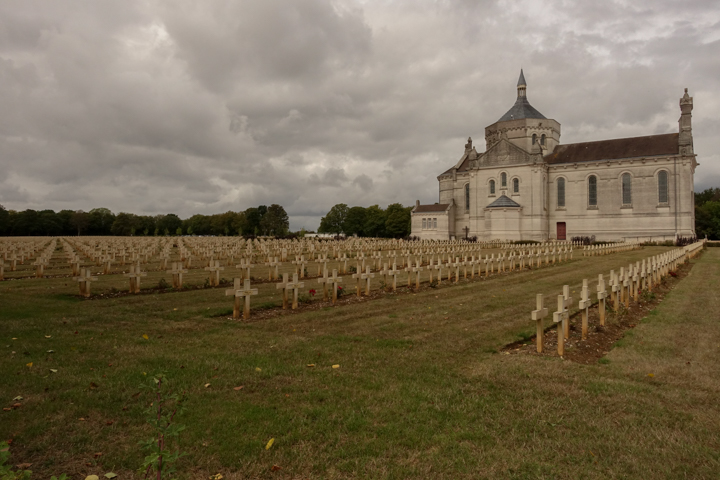
The memorials to the soldiers are powerful. We stopped at three: one to Canadian soldiers (and staffed by Canadian students), one holding a small number of French and British troops and the engraved names of 73,000 British and Commonwealth soldiers who died in the Battle of the Somme and have no known graves, and one holding French soldiers. An awful thing is that all the memorials contain many, many graves marked “A soldier known but to God.” Over 50% of the soldiers killed on both sides were never identified; most were not even found.
If you’re at all interested in seeing war sites, my advice is: go to pay tribute to the bravery and courage and patriotism of the soldiers, and to curse the idiocy of their leaders, and to think about the waste of war.
I wish I could find some profound words to sum up the experience of seeing these memorials and cemeteries. I cannot, really; honestly, it’s hard to even write about this. The overriding emotion: deep sadness and the thought “What a waste.”