A Visit to Abbaye Preuilly
Last year Laurie and I were taking a leisurely drive in the country east of our home base and happened upon an ancient and long abandoned abbey - Abbaye Preuilly. We found an entrance, but it was locked, and the abbey grounds were surrounded by a twelve-fifteen foot wall, so no peeking over it. There was a short summary of the abbey on the entrance building, so we learned a little about it. Here is the entrance we saw:
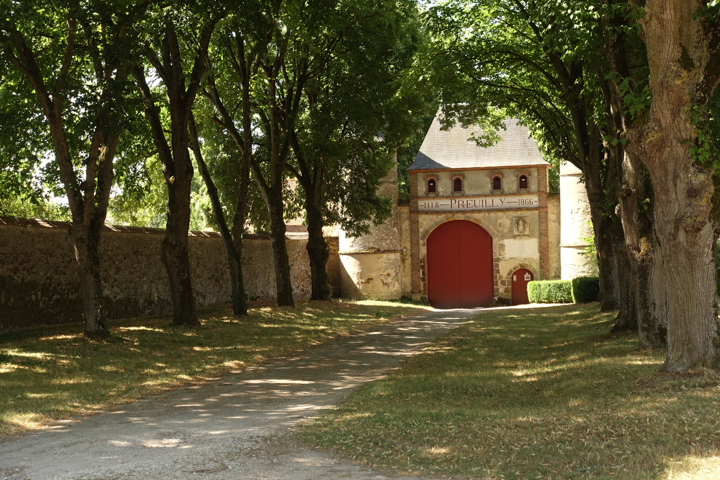
I looked up the abbey on Google Earth and could see that there were some buildings there. I also could see that there was a gate that would allow us to look into the grounds from a distance. When we found ourselves in the same area a few days later we looked through that gate and were amazed by what we saw. I also found a website maintained by the family that nows owns the property. Rather than making you find that post, I’ll just repeat some of it here:
It turns out this is the Preuilly Abbaye, once the home of an order of Cistercians. The Abbaye was founded in 1118. The Abbaye was home to monks — who took the religious vows of the order — and lay people, who might have lived in the Abbaye or nearby, and who worked the fields owned by the Abbaye. The number of monks reached a peak of 26 and the Abbaye thrived for almost seven centuries.
The French Revolution banned the Cistercian Order (and all other religious orders in France) and the property of the Abbaye was auctioned off in pieces. Then a secular savior appeared: in 1829 Dr. Henri-Marie Husson, a physician at the Hotel-Dieu in Paris, started to purchase the land and buildings that had been auctioned. By 1842 he owned all the property and buildings that had once belonged to the Abbaye. He restored what could be restored and tried to stop the ravages of time on others. The work has been carried on by his descendant families, several of which live on the grounds of the abbaye to this day. The property is still owned by the Husson family.
The buildings we had seen were part of the Abbaye and are now used by a riding school (2026 edit: there is a riding school, and also an organization that breeds a special kind of horse). The Chapel of the Abbaye is in ruins, but enough remains standing to see its size and structure. Many other buildings also remain; the entrance building with the sign was restored by Dr. Husson. (Except for these, none of the Abbaye buildings were visible to us over the high walls — I learned about them on a website, bien sûr.) The Abbaye is open to the public two days each year: on France’s Day of Patrimony, when many historical buildings in France are open, and the fourth Saturday of September, when a centuries-old pilgrimage to Preuilly occurs. Maybe someday we’ll be here for the Day of Patrimony and get to see the Abbaye. The Husson family has said it would like to open the Abbaye more days.
Now we knew a lot more about Abbaye Preuilly. What we didn’t know was how this place was going to grab us and touch us deeply. The story of the Abbaye, its abandonment and its recovery by Dr. Husson, made it a special place to us.
This year, we would be in the area for the two days that the Abbaye is open to the public - the two days in September when almost every historic building in France is open. Laurie and I made plans to visit on Saturday.
Just to make sure it would be open (some historic places open only on Sunday), I sent an email to the info address at the Abbaye Preuilly website asking if the Abbaye would be open the next day, Saturday. I immediately got a response saying that it would and wishing us a bonne visite. It was signed “Patricia Husson;” certainly a relative of Dr. Husson, Abbaye Preuilly’s saviour.
We arrived a little after 10:30 the next morning and the Abbaye was definitely not open. I sent another email to Madame Husson asking how we could get in, and she immediately replied that the Abbaye was open only on Sunday - evidently she misread my original request. Then she added, “Someone will come to open the door for you.” And someone did; by the time we got to the entrance the door was open, and in we went.
The Abbaye contains a number of buildings that clearly were built in the late-1800s, after Dr. Husson gathered the Abbaye lands back together. We saw kids playing and several cars parked in front of each building, leading us to believe that these were houses for the Husson families that live there.
But it was the area of the Church ruins that drew us. This was not a small church: the interior was about 270 feet long, and the vaulted roof was probably 50 feet high. It was built sometime around 1200, but no one seems to know when it started to fall apart. When Dr. Husson moved to the abbaye around 1850, he and then his sons restored several buildings, but all they could do with the ruins of the church was to shore it up to stop its deterioration.
Okay, enough words; Here are some pictures of Abbaye Preuilly as it is today.
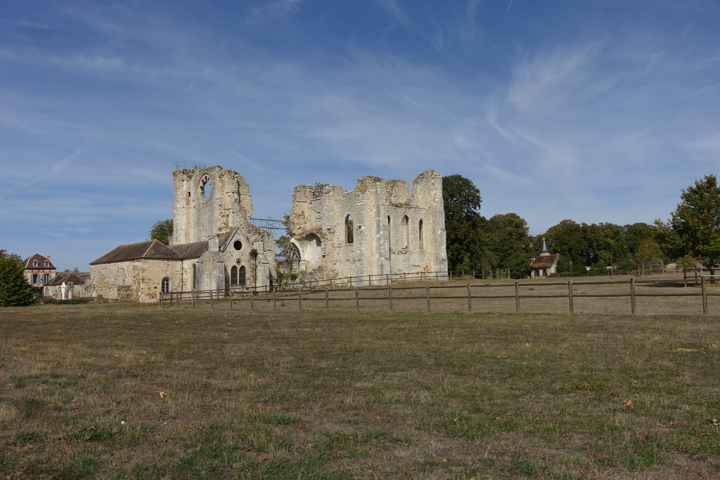
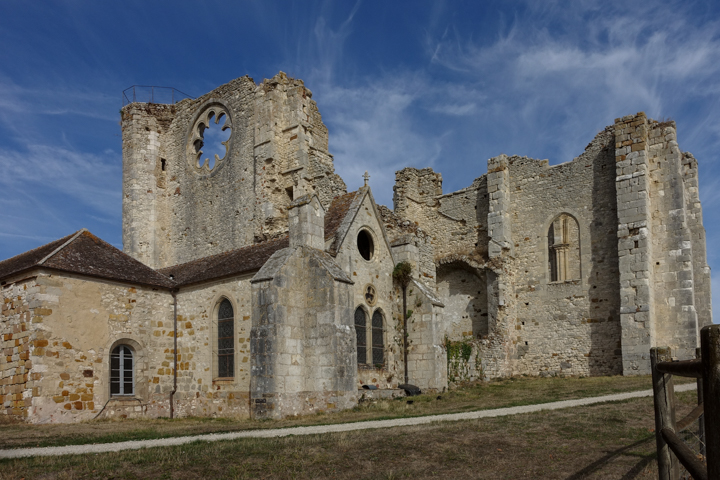
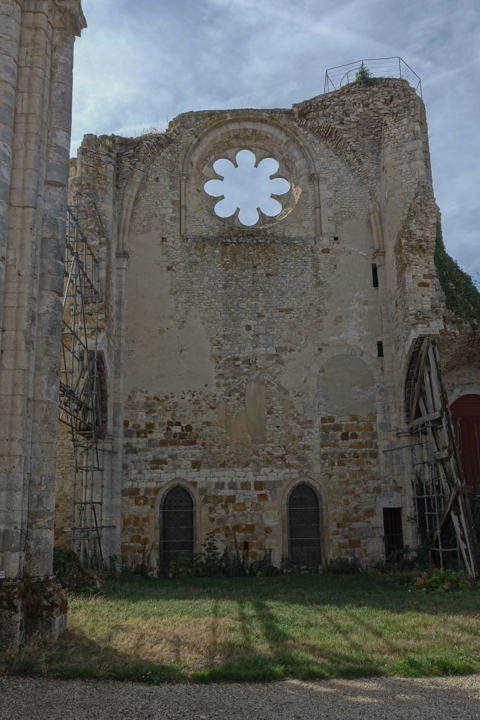
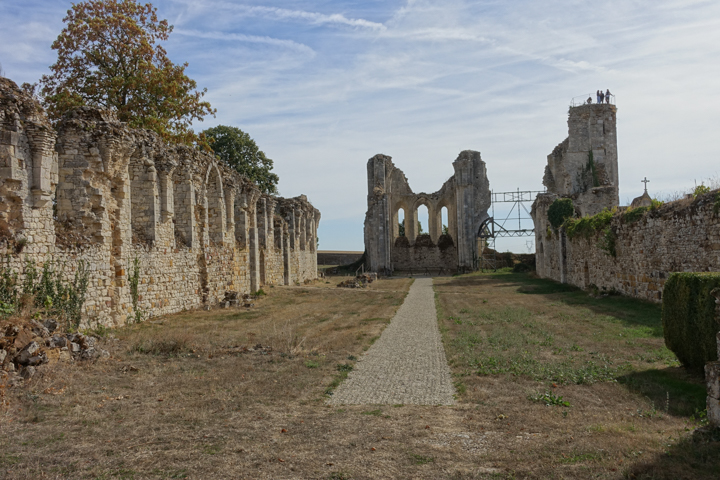
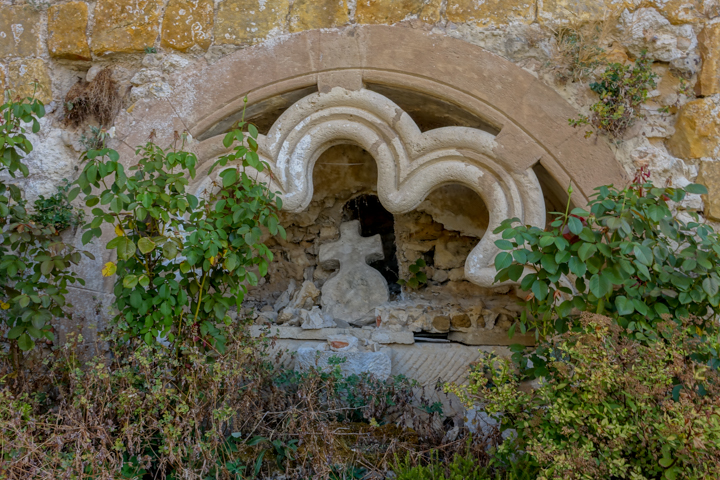
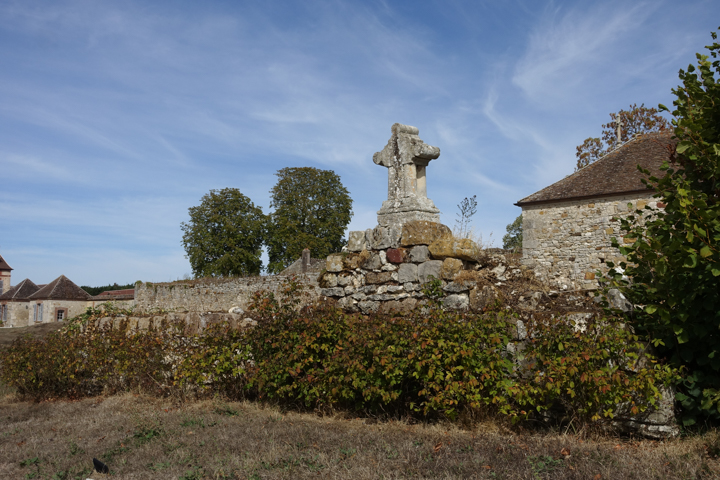
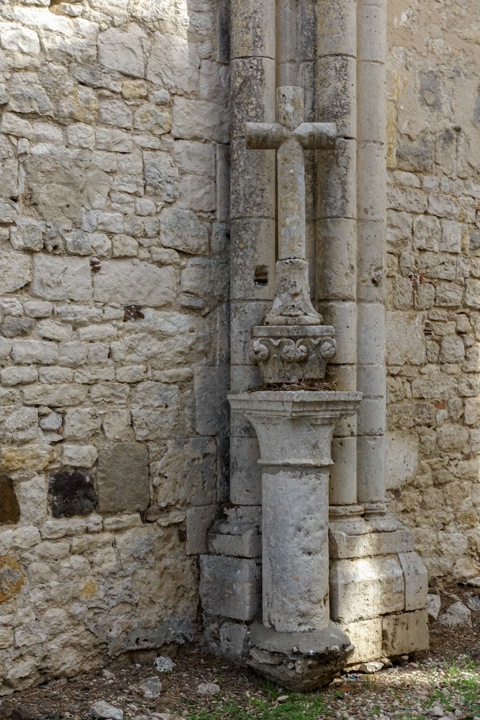
As we walked around the abbaye we saw a group of young folks with a man who was obviously showing them the abbaye (we’d read that it’s possible to schedule a guided tour). Later, as we walked out of the grounds, he came near us and I greeted him and asked if he spoke English; he did (phew) so we talked to him a bit about how touched we were being there. He gave us a bit of history of the abbaye and at one point said, “It’s been in the family for generations” so I asked him, “Are you a Husson?” He was - the great-great-grandson of Dr. Henri-Marie Husson, the physician in Hotel-Dieu in Paris who decided to save Abbaye Preuilly in 1829. Patricia Husson, who I emailed with and who sent someone to open a door for us, is his mother.
I learned later that the farmland of the abbaye is being used for research into improving organic farming methods. This effort is led by Audren Husson, the gentleman Laurie and I talked with as we left.
I know both readers of this blog may be saying, “What’s so interesting about an abandoned abbaye?” I can’t answer that. We love places like this and will go to great lengths to see them. Laurie and I were touched by Abbaye Preuilly when we first saw the gatehouse building and then looked through the gates to see the ruins of the church. We find it a fascinating part of French history, back almost 900 years. You hear of places that speak to a person; Abbaye Preuilly definitely speaks to us.